02 — Capability
Project Management
Planning, coordination and execution control, with reporting that shows the real state of the works — including what is at risk.
Overview
Project Management
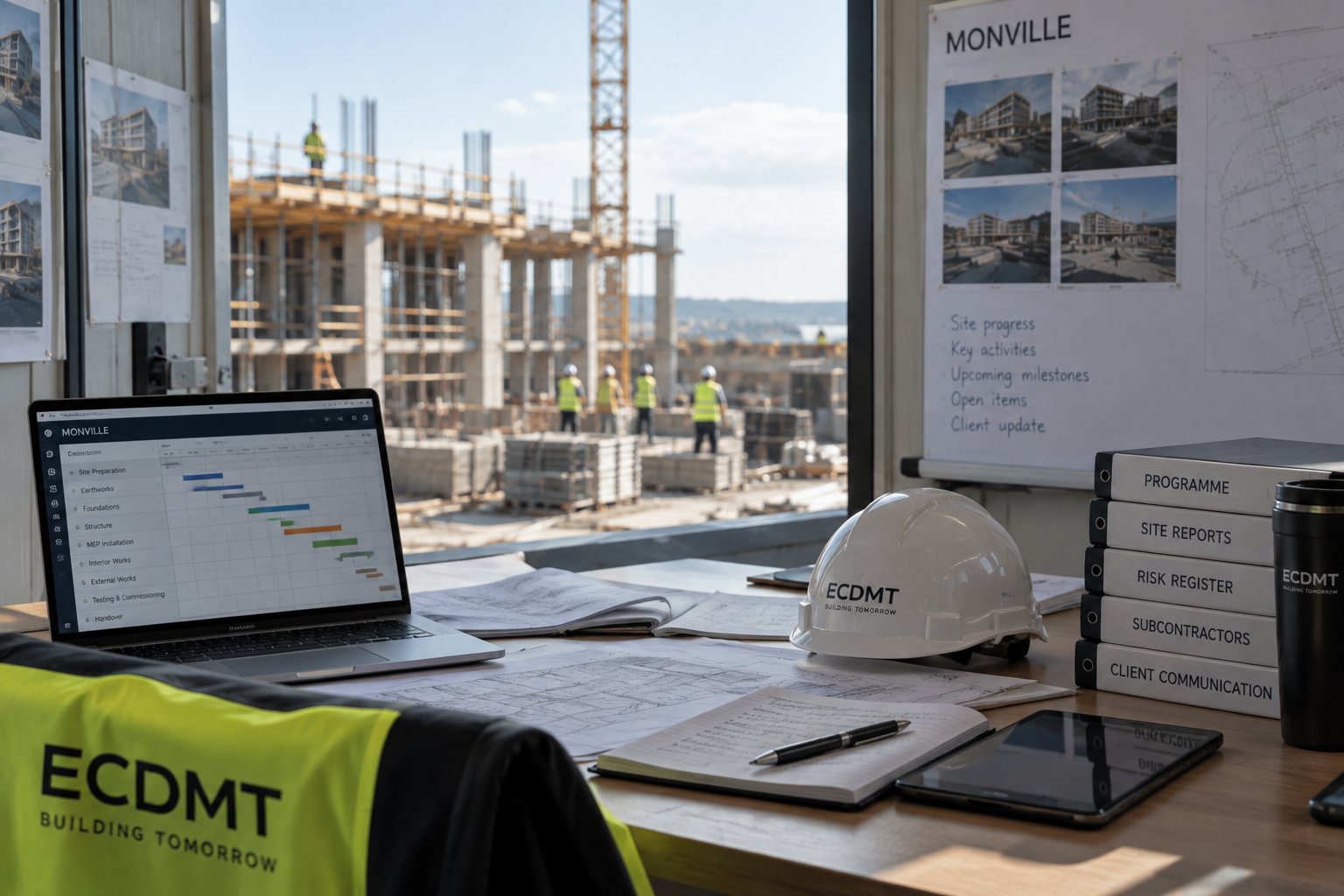
Every contract is run with a management structure defined before the first day on site: assigned responsibilities, a baseline programme, a procurement plan, a risk register and a reporting rhythm agreed with the client.
Progress is measured against the baseline, not against last week’s recollection. Deviations surface while there is still room to decide, and are presented with the available options and their effect on time and cost.
The objective is simple: the client should know, at any moment, where the project stands, what is at risk and which decision is needed.
Key capabilities
- Baseline programme and critical path
- Cost control and change management
- Risk register and interface management
- Periodic reporting and site meetings
- Permitting and authority coordination
- Close-out, handover and warranty period
How this fits the process
Five stages. One chain of responsibility.
The same sequence applies whether the contract is a single residential building or a phased development. What changes is the depth, not the discipline.
- 01
Discover
Site assessment, constraints, existing design status, programme drivers and the client’s real priorities.
- 02
Plan
Baseline programme, procurement plan, resource plan, risk register and the reporting structure for the contract.
- 03
Engineer
Design review, discipline coordination, construction detailing and resolution of clashes before execution.
- 04
Build
Site management, subcontractor coordination, inspection and test plans, progress control and change management.
- 05
Deliver
Commissioning support, snagging and close-out, as-built documentation, handover and warranty period.